PicoWay® Picosecond Laser
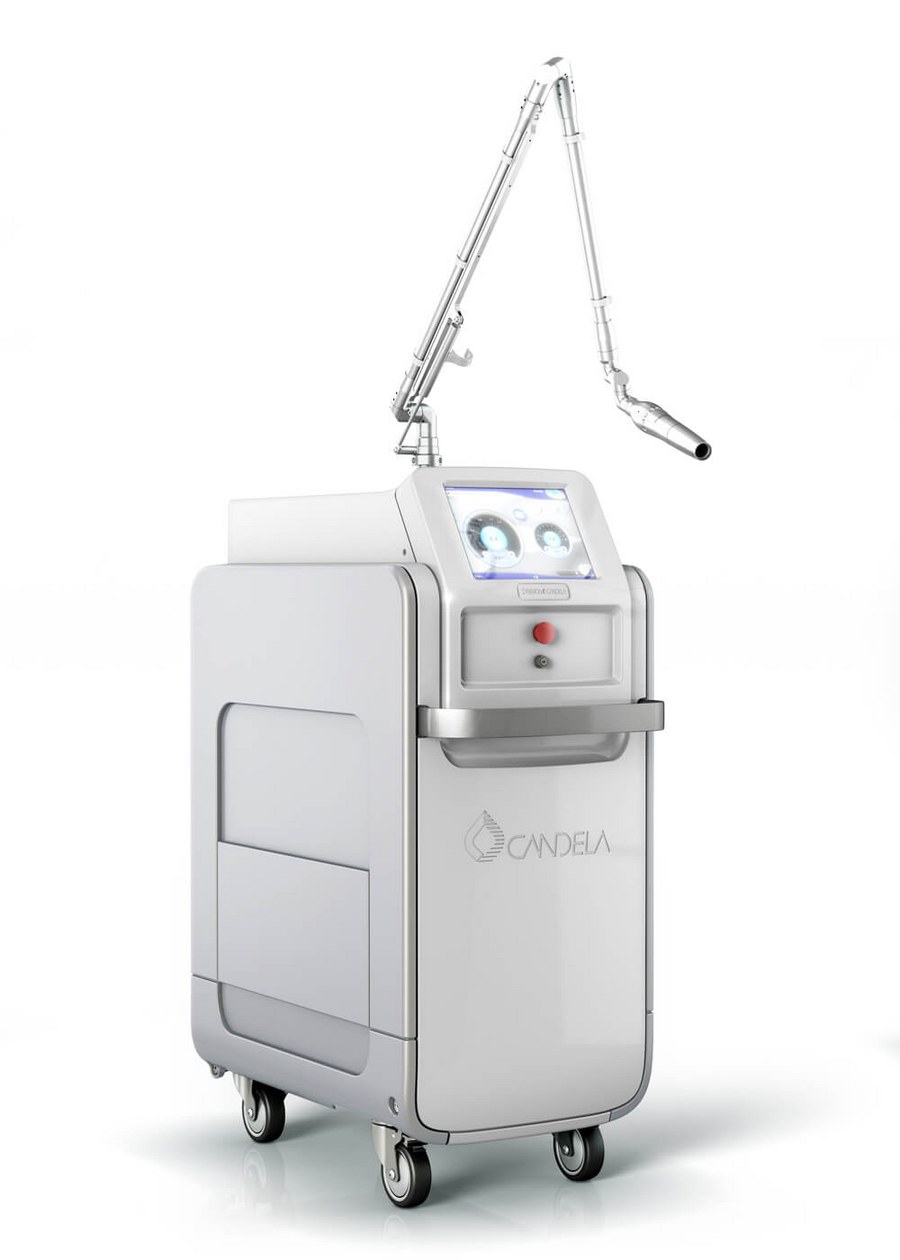
About this device
PicoWay, from Candela in the U.S., is the reference picosecond laser platform — in leading clinics across North America and Asia, its name is nearly synonymous with pigment laser treatment.
Its defining difference is pulse speed: energy is delivered in picoseconds — trillionths of a second — working mainly through a photoacoustic effect rather than heat, shattering pigment into fine, dust-like fragments the body then clears naturally, with limited heat spread to surrounding tissue. Four true picosecond wavelengths (532, 730, 785 and 1064 nm) are matched to the depth and colour of the pigment — dark, red and blue-green inks and spots each have their wavelength — and the Resolve fractional handpieces create tiny vacuoles beneath the surface that trigger new collagen and elastin while leaving the epidermis largely intact, which is why PicoWay also addresses acne scars and fine lines.
Most sessions take about 15–20 minutes, with short downtime. Sun spots, freckles, melasma and uneven tone — or unwanted brow pigment and tattoos you would like faded — all start with an in-person assessment of your pigment type, after which the wavelength and settings are tailored to you. See clearly first, then treat precisely.
What it can do
- Improves sun spots, freckles and pigmentation
- Brightens dull, uneven skin tone
- Fades unwanted eyebrow pigment
- Fades body tattoo ink
Who it suits
- Sun spots, freckles or patchy pigmentation
- Dull or uneven skin tone
- Enlarged pores and rough texture concerns
What to expect
- Consultation and skin assessment
- Cleansing, eye protection and treatment preparation
- Laser treatment of the target areas, adjusted to your skin
- Soothing care, moisturizer and sun-protection advice
Good to know
- Temporary redness or mild swelling can occur after treatment
- Strict sun protection is important after each session
- A course of sessions may be recommended; spacing and number vary by person
The information on this page is general in nature and is not medical advice. Results vary from person to person, and no outcome can be guaranteed. Whether a treatment is suitable for you can only be determined after an in-person assessment.